


DENOMINACIÓN DE ORIGEN ARRIBES
Country: España
Hall 4, Stand 4F23-76
Products 2
Activities 0
Vineyards have been present in “Arribes del Duero” since ancient times, to the extent that it is thought that the area could include some of the first and most ancient vineyards in the Duero Basin. There are two theories being studied regarding this: one which links the arrival of vineyards to the Duero during Roman colonization, and another which links it at much earlier period to the trade routes used by the Phoenicians and to the natural port formed where the Duero reaches the sea (the current day Portuguese town of Port). The first significant evidence comes from the Middle Ages, especially towards the first part of the 16th century, when commerce begins and becomes legislated, sometimes to regulate it and at other times to protect it. We know that during these times large extensions of vineyards already existed, which produced yields significant for their quantity and quality, so much so that surpluses appeared and the growers were forced to look for markets outside their traditional ones. The economic importance of the vineyards became marked at the beginning of the 17th century. In 1888, Phyloxera arrived from Portugal, and remarkably, in contrast to other areas, led to vineyards becoming even more established in the area, giving them part of their actual configuration and implementing the cultivation of predominantly red grape varieties.
The climate of the area has marked Mediterranean influences which favours vineyard growth. Rainfall is distributed evenly throughout the growing season and the hot, dry summers with long hours of sunlight cause a strong sunning effect which is increased by the slope and southern orientation of the terrain. The well-drained sub-soils contain crumbly slate that is characterised by its ability to regulate temperature through the accumulation of heat during the day and its gradual release at night.
The area has an extension of 4,152.71 square kilometres, reaching from the south-western part of the Zamora Province to the north-western part of the Salamanca Province. The actual “Arribes del Duero” area is a hilly formation occupying a thin and long margin along the Spanish-Portuguese border. The area is marked mainly by its great altitude differences and sloppy terrain; even though it cannot be defined as mountainous, the steep valleys can have differences of between 700 metres at their highest level down to 130 metres above sea level. The description of the area’s relief is simple and comprises two distinct land formations: higher flatter ground and the steep sided valleys of the rivers which cross the area.
The soils are shallow with a sandy texture of small granite and quartz rocks and with numerous rock outcrops.
The total area of vineyards in Arribes del Duero” is about 4,800 hectares (distributed evenly between the provinces of Zamora and Salamanca), of which 270 hectares are registered in the Regulatory Council for the Designation of Origin (D.O.) Arribes. The vineyards of the area are mainly old (at least 50% were planted before 1956) and therefore the main cultivation system is goblet although the trellis system is being introduced in new plantations. Minimum plantation measurements (established by the Regulatory Council) are of 2.1 x 2.1 metres, with a maximum of 40,000 heads per hectare. Maximum permitted yields are 7,000 Kg. per hectare for red grape varieties and for white grapes 10,000 Kg., although in reality yields seldom exceed the average of 3,500 Kg/ha.
The main red grape varieties are Juan García (indigenous or local) Tempranillo Bruñal and Rufete, the Garnacha, Syrah and Mencía being allowed as complementary varieties. Malvasía is the main white grape variety, being complemented by Verdejo and Albillo. The Regulatory Council is currently dedicating some of its effort to the study of other autochthonous grape varieties to help their recovery and encourage their presence in the area: the red varieties Bastardillo Chico, Mandón, Tinta Jeromo, Gajo Arroba, and the white variety Puesta en Cruz.
Address
Plaza Mayor, 1, Villar del Buey, 49230, Zamora, CASTILLA Y LEÓN, España
Website
Products
2 products
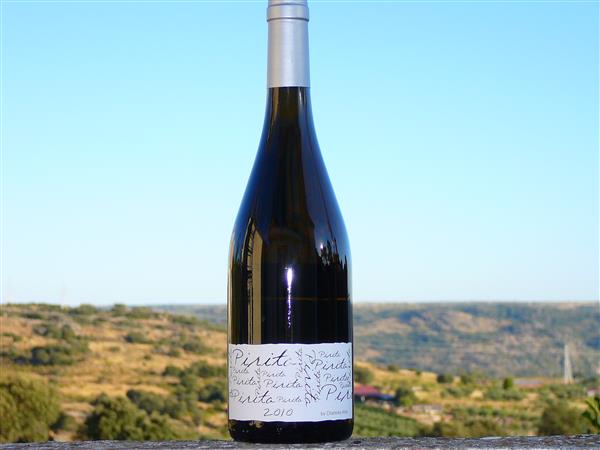
Pirita Blanco 2018
Bodega AlmaRoja Vino Blanco
Subsector: D.O. YOUNG WHITE WINE
DENOMINACIÓN DE ORIGEN ARRIBES
Hall 4
Stand 4F23-76

QUINTA LAS VELAS BRUÑAL
VINO CRIANZA BRUÑAL 2015
Subsector: D.O. AGED RED WINE
DENOMINACIÓN DE ORIGEN ARRIBES
Hall 4
Stand 4F23-76